URBAN ROUTE
Monument in honor
of trikitilariak
Zumarraga, a picturesque village nestled in the deep mountains of Gipuzkoa, is a place whose identity and culture are deeply marked by music and history. This small corner of the Basque Country is known not only for its impressive historical and cultural heritage, but also for having been a melting pot of musical influences that have left an indelible mark on Basque culture, particularly through the trikitixa, one of the pillars of popular music in the Basque Country.
Zumarraga’s connection with music has deep roots, dating back to the arrival of the diatonic accordion in the 19th century. In 1859, during the construction of the section of the Northern railway that passed through Zumarraga, a group of Italian workers from the Alpine valleys brought this instrument with them. Among them was Juan Bautista Busca Prietto, who, like many of his compatriots, arrived with his accordion to liven up the long nights of work in the railway camps. His presence in Zumarraga was decisive: not only did he become the first documented accordionist in the area, but in 1864 he opened a tavern where he played regularly for his customers, marking the beginning of the accordion’s presence in the town’s cultural life.
This introduction of the diatonic accordion, a relatively new instrument in the Alpine regions, quickly became part of everyday life and festivities in and around Zumarraga. The accordion became the centre of celebrations, especially at pilgrimages, where it became the favourite music of the rural Basque community. The trikitixa, as this style is known today, established itself as the soundtrack of Basque identity, particularly in the area where Basque is spoken and where traditions are kept alive with intensity.
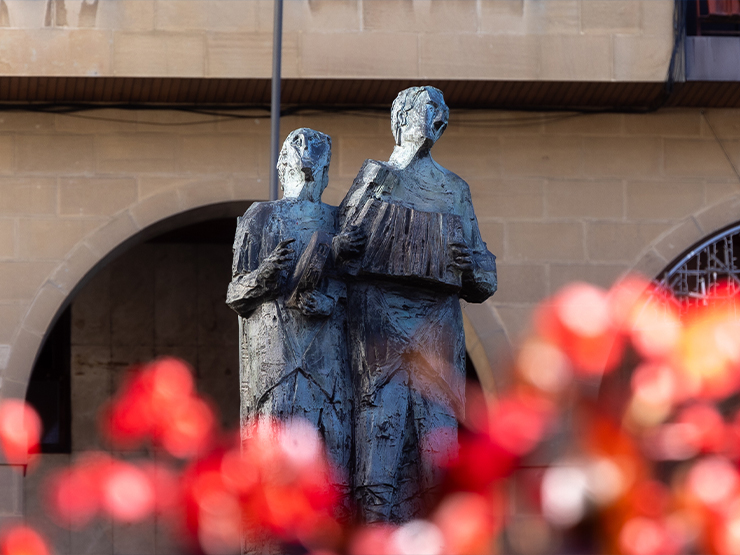
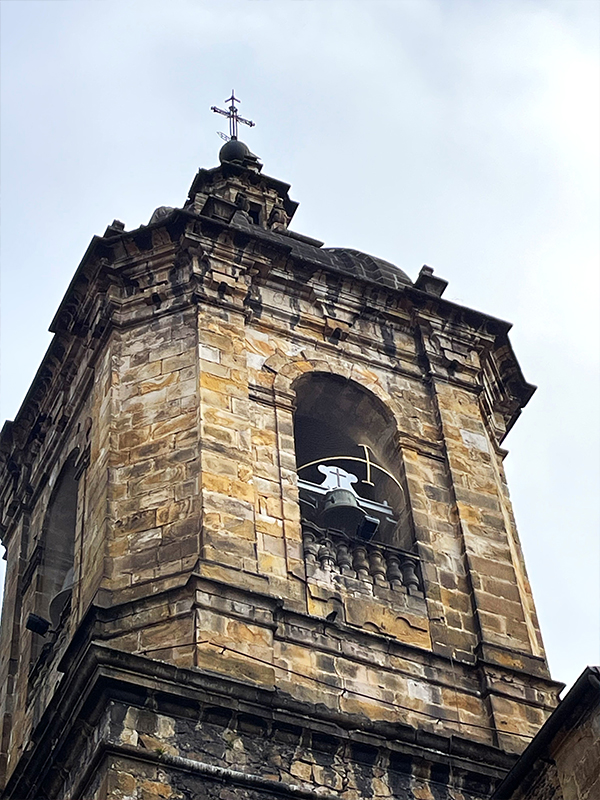
The importance of Zumarraga in the development of the trikitixa is undeniable, and this legacy is commemorated in a symbolic way with a sculpture placed on a roundabout in front of the Church of Santa María de la Asunción, inaugurated in the festive context of Santa Lucía on 12 December 2004. The work, in expressionist style and made in bronze by the sculptor Antonio Oteiza, presents two figures: one with the trikitixa and the other with the tambourine. This sculpture is not only an artistic work, but also a tribute to the fundamental role of Zumarraga in the history of Basque music, especially the trikitixa.
This love of music is not something recent. Zumarraga’s musical tradition has been passed down through generations, with outstanding figures such as Juan Ignacio Busca, born in the town in 1868, who was recognised as one of the best European organists of his time. On the other hand, Secundino Esnaola, another favourite son of Zumarraga, was a renowned conductor of the Orfeón Donostiarra, known for his ability to conduct with delicacy and to extract unequalled nuances from the group. Finally, we have the Zumarragako Trikitixa group; with more than 100 years of existence, they have been the first trikitixa group created in the Basque Country and have had a special importance in the diffusion of this. These characters are just some of the many who have contributed to the musical renown of Zumarraga.
The link between Zumarraga and music, and especially with the trikitixa, is still celebrated today in events such as the Ciclo de Música de la Antigua, a festival that celebrates instrumental and vocal music and various performances. This celebration, which takes place every year in September, is a reminder of the crucial role that Zumarraga has played in Basque culture and how its musical heritage remains an essential part of the life of the town.
The music, history and identity of Zumarraga are irremediably intertwined. This small but significant corner of Gipuzkoa has been a hub for the exchange of ideas, people and traditions, particularly through the railway which, since 1859, brought not only the accordion, but also new ways of thinking and new cultures. Through its musical legacy, Zumarraga continues to be a reflection of the cultural richness of Euskal Herria, a place where history is heard, felt and lived every day, especially through the unmistakable sound of the trikitixa.