URBAN ROUTE
Wicker
The History of the Wickerwork Factories in Zumarraga
For more than a century, Zumárraga, in Gipuzkoa, was the nerve centre of the wicker industry in Spain. In the late 19th and early 20th centuries, wicker production in this municipality reached enormous importance, not only locally, but also on the national and international market. Wicker, used mainly for the manufacture of baskets, furniture and other handicrafts, was an essential part of the region’s economy.
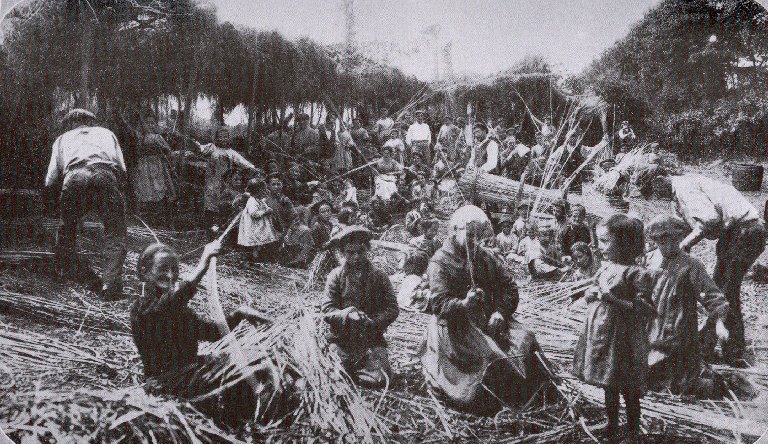
The wicker industry in Zumarraga began to flourish when local farmers started to grow wicker on their plots. The harvesting and manufacturing process was completely handmade, with local wickerwork workshops becoming small workshops employing a large part of the population. Although wicker had been grown in the region for centuries before that, it was not until the late 19th century that it began to be more formally organised and the industry began to develop.
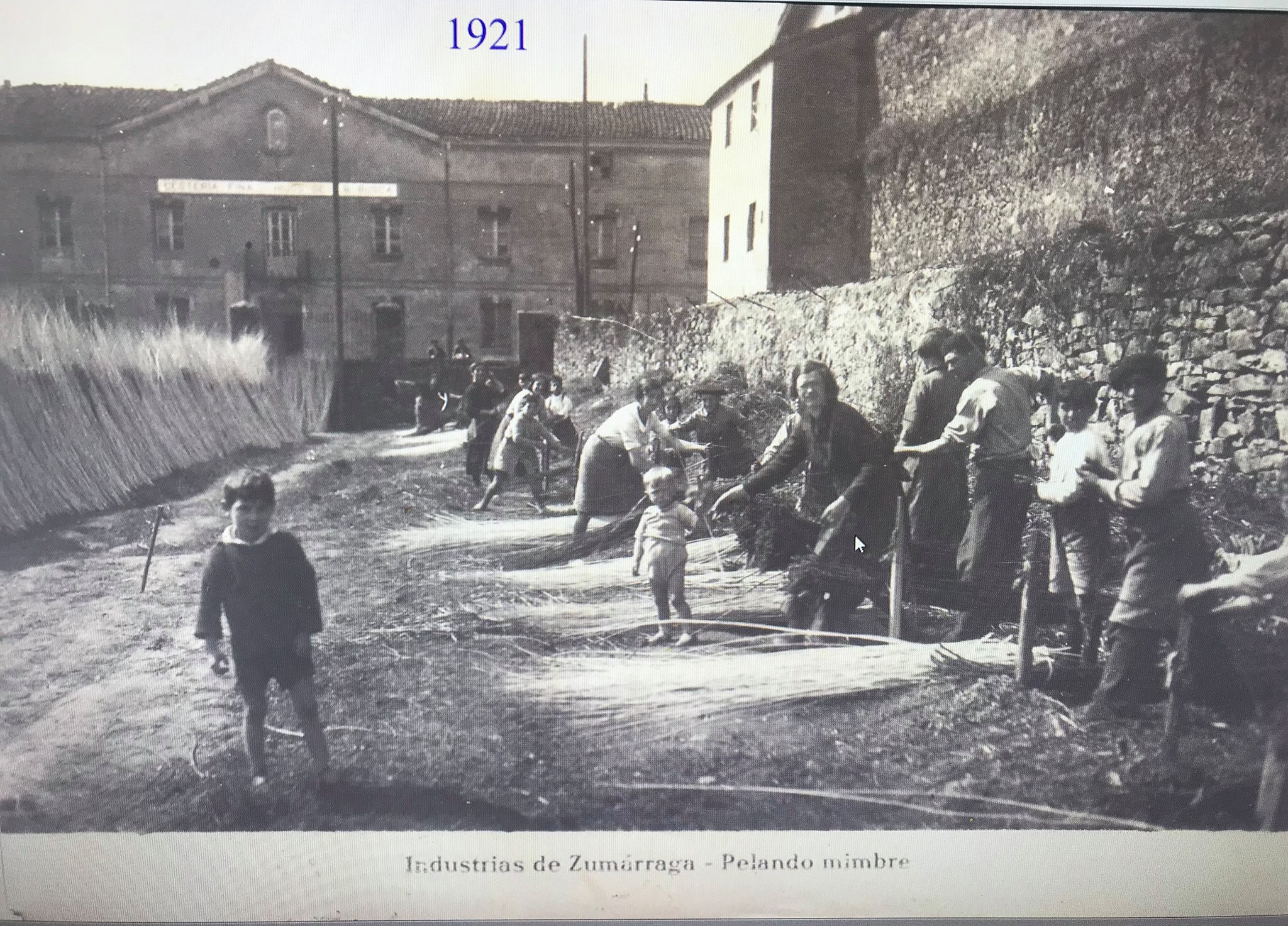
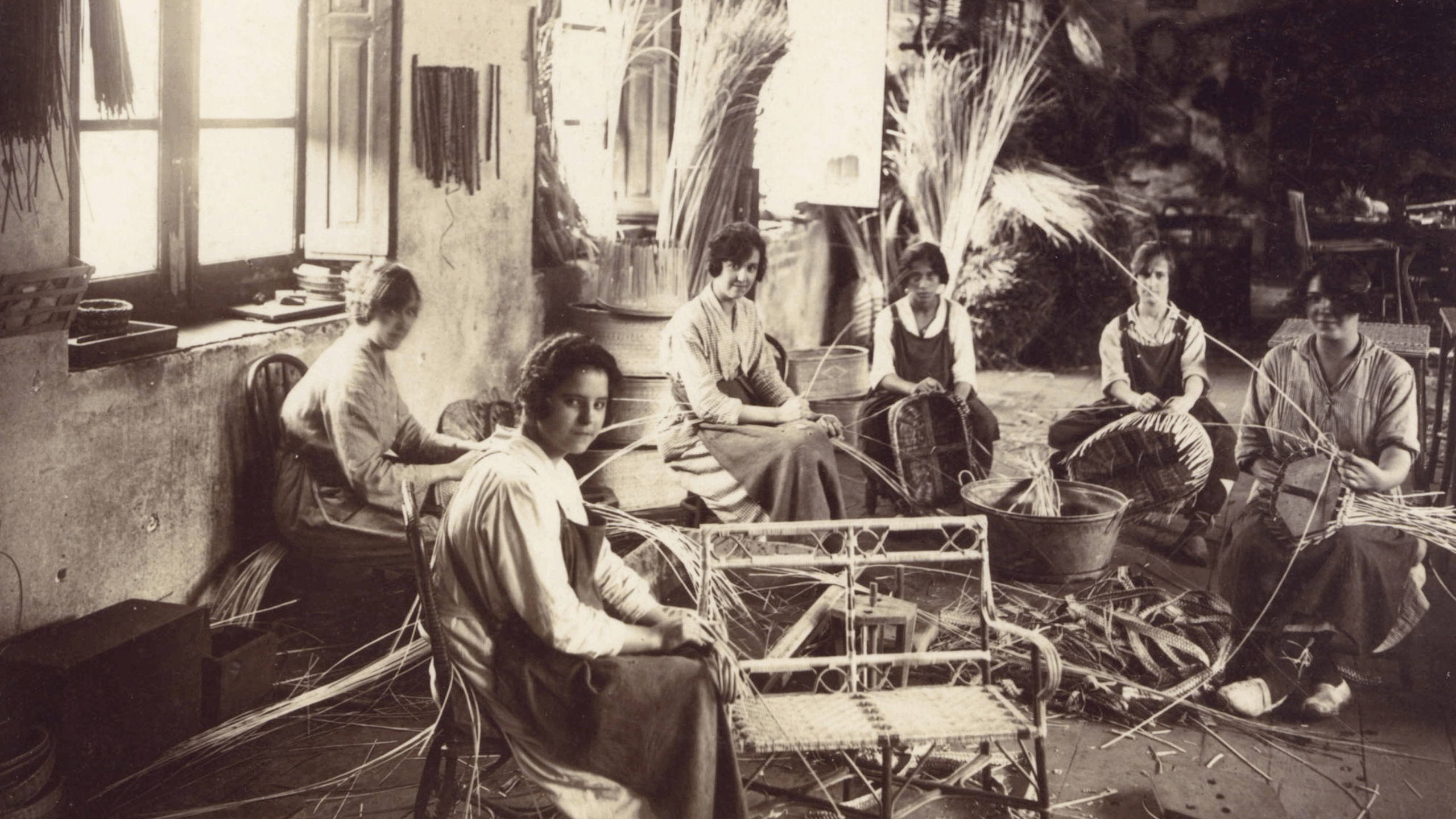
One of the aspects that characterised the Zumárraga factories was the manual nature of the work, as a large part of the peeling process and the making of the products was carried out by hand. The wicker peelers were a fundamental part of this process, where workers and craftsmen spent long hours preparing the wicker rods for their subsequent use in the creation of baskets and furniture. The wicker, which was grown mainly in the fields near the village, needed meticulous treatment to ensure its quality and durability.
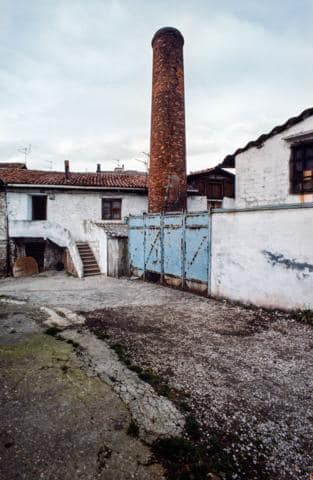
In the early years of the 20th century, some of the most outstanding factories in the region, such as the Busca family’s wicker factory, gradually consolidated their position as a major reference in wicker production. For decades, Zumárraga was known for its specialisation in wickerwork, and its production supplied both local and international markets. However, with the arrival of mechanisation in the industry and competition from other industries, especially the iron and steel industry, wicker ceased to be the economic driving force of the region, and the wickerwork began to disappear.
The Busca Family and its Impact on the Wicker Industry
In this context of the flourishing of the wicker industry in Zumarraga, the Busca family played a crucial role in the evolution of this industry. The family’s history in the wicker business began with the trading company ‘Hijos de Juan Bautista Busca’, founded on 15th January 1907. This company continued the work of the previous company ‘J. Busca Azpiazu y Cía.’, which was already engaged in the manufacture of wicker products. The new company, located in Zumárraga, was founded by the brothers José, Antonio and Laureano Busca Sagastizabal, and specialised in the manufacture of objects made of palm, reed and wicker.
The initial share capital of the company was 120,000 pesetas, which reflects the magnitude of the operation. As the company grew, its production diversified, and the factory became one of the most important in the region. During the years of its greatest splendour, the Busca factory’s products were not only sold locally, but were also exported to other places, especially in the context of the trade fairs held in Zumárraga, such as the Santa Lucía Fair.
In 1942, the Busca family business underwent a significant change when it was transformed from a general partnership to a joint stock company. This change reflected the company’s growth and its ability to adapt to changing times. The family also acquired properties in the region, such as the ‘La Pequeña Francia’ estate in Villarreal (Álava), a place that became their summer retreat.
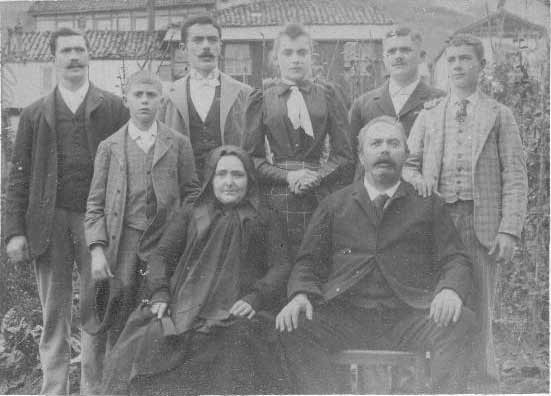
Over the decades, the Busca’s wickerwork factory was a fundamental pillar for the family, providing not only economic sustenance, but also a sense of identity. Generations of the family worked together in the industry, and wicker became a family heirloom passed down from father to son. The images of the factory, the furniture catalogues and the stories of the workers who were part of the production are still living memories of a golden era for the family and for Zumarraga.
However, despite its success, the wicker industry in the region began to decline due to the mechanisation of processes and competition from other more modern industries. The Busca family’s last stage in the wicker industry was marked by the reflection of José María Busca Isusi, who, shortly before his death, commented that, although he had worked tirelessly for wicker, his world was coming to an end. Wicker, which had been the economic basis of the family and of Zumárraga for generations, began to be just a memory of times gone by.
Today, the history of the Busca wicker factory is preserved as a legacy that remains part of the collective memory of Zumarraga. Catalogues, old photos and workers’ accounts continue to bear witness to the importance that the family and the wicker industry had in the region. Although the industry no longer exists as it once did, wicker continues to be a symbol of the tradition and identity of Zumárraga and of families like the Busca’s who, with their effort and dedication, contributed to building that history.