URBAN ROUTE
La Antigua Hermitage
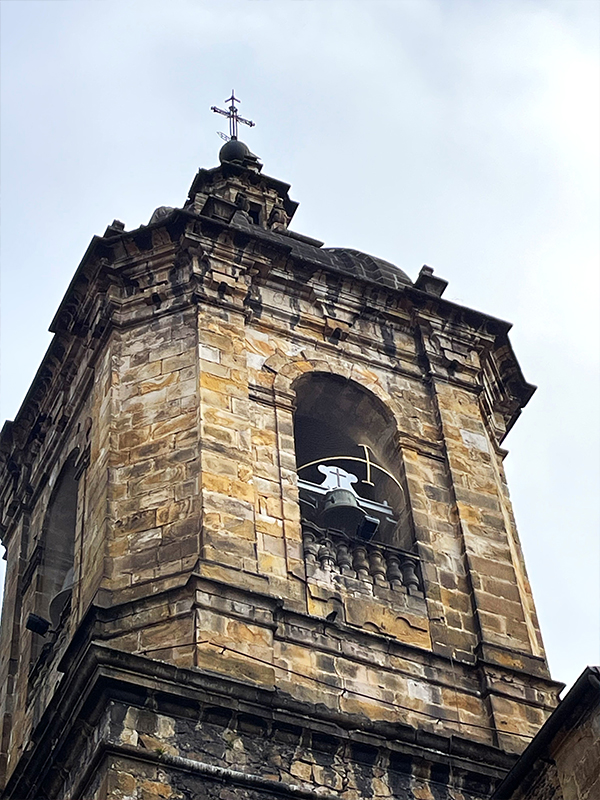
Antio or La Antigua, was the first parish church of the locality. It is possible that it dates from an earlier period, but the first documents about it date back to 1366.
Legend has it that it belongs to the time of the gentiles. These wanted to destroy the temple that the Christians were building by throwing rocks from Mount Aizkorri. But the Christians took advantage of those stones to finish building their temple.
In the middle of the 16th century there was a judicial process in the municipality, after which it was decided to build a new temple in the valley, near the river, where more and more families were settling. This caused ‘La Antigua’ hermitage to fall into oblivion and that is precisely where it got its name, since it was ‘La Antigua’ parish. However, centuries later it is considered the cathedral of Basque hermitages.
The building is built in a transitional style, between Romanesque and Gothic. La Antigua, has undergone many interventions throughout its history, although those of the initial decades of the XVI century stand out, when the choir was completed; those suffered at the end of the XVI century and beginning of the XVII, when, after losing in 1576 the category of parish temple, it was reduced to the simplest of a hermitage (fundamentally it was provided with vaults, the main altarpiece was built, dedicated to The Visitation, etc.); those of the XVIII century, when it was enlarged on the side of the presbytery with the construction of the apse (in it a Gothic window and the calvary of 1480 were reused). ); those of the 18th century, when it was enlarged on the side of the presbytery with the construction of the apse (in it a Gothic window and the calvary of 1480 were reused), and a good part of the roofs were restored, very damaged by time; and finally in the decade of the 70’s of the 20th century, when the vaults were removed, the house of the serora, etc., was eliminated.
La Antigua was declared a National Historic-Artistic Monument on September 23, 1965, and a Basque Historic-Artistic Monument on July 27, 1984.
On July 2, Zumarraga’s patron saint’s day, the ezpatadantza (sword dance) is danced before the Virgin. The legend speaks of a privilege to use weapons in its interior, to those affections, from 1539.